(520) 790-2151




One of the more common concerns patients bring up when considering dental implants is a variation of the same worry: “I’ve been missing this tooth for years — is it too late?” It’s a fair question, since the jawbone naturally begins to shrink in the area where a tooth is missing, a process that continues the longer the gap goes unaddressed. The good news is that even when bone density has decreased significantly, there’s usually still a path forward.
That’s exactly the kind of situation an experienced implant dentist in Tucson is trained to evaluate and address. Dr. Graig Brown’s practice regularly works with patients who assumed they weren’t candidates for implants due to bone loss, only to find out that a bone graft, performed ahead of the implant procedure, can rebuild enough support to move forward successfully.
Why bone loss happens after a tooth goes missing
The jawbone relies on stimulation from a tooth root to maintain its density over time. Once a tooth is gone, that stimulation disappears, and the bone in that specific area gradually begins to resorb, or shrink. This process can start within just a few months of losing a tooth and continues progressively the longer the area goes untreated. It’s not something most people notice happening, since it doesn’t cause pain, but it can eventually affect the overall shape of the jaw and, in more advanced cases, even the appearance of the surrounding facial structure.
How a bone graft works to rebuild lost support
A bone graft involves adding material to the area where bone has been lost, giving your body a scaffold to build new, healthy bone around over the following months. Depending on the specific situation, graft material might come from your own body, a donor source, or a synthetic material designed to encourage natural bone regeneration. Once the graft has fully healed and integrated, typically over a period of several months, the area is generally strong enough to support a dental implant with the same long-term stability as a site that never experienced significant bone loss.
What the actual grafting procedure involves
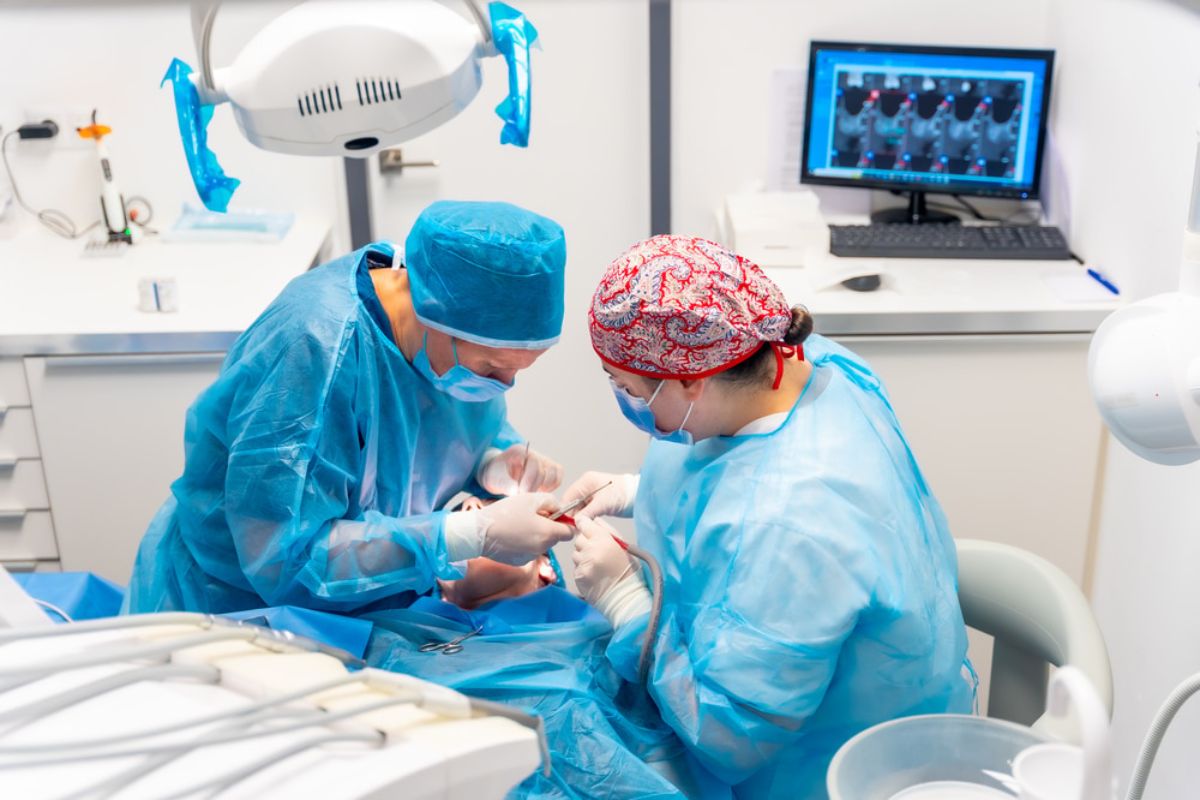
For patients hearing “bone graft” for the first time, the term can sound more intimidating than the reality of the procedure itself. In most cases, the process is performed under local anesthetic, sometimes with sedation available for patients who prefer a calmer experience. Graft material is placed directly into the area of bone loss, and the site is closed to allow healing to begin. Many patients describe the recovery as comparable to a tooth extraction, with some swelling and mild discomfort in the days immediately following the procedure that improves steadily over the following week.
Depending on the extent of grafting needed, some patients are candidates for a smaller, localized graft performed at the same time as implant placement, while others with more significant bone loss need the graft to heal fully on its own first before an implant can be placed on top of it. Dr. Brown’s team walks through which approach applies to your specific situation clearly during the evaluation, so there’s no ambiguity about what to expect from the process.
Why choosing an experienced provider matters for this specific procedure
Bone grafting combined with implant placement is a more technically involved process than a straightforward implant in an area with healthy, sufficient bone. Precision matters significantly here, both in accurately assessing how much graft material is needed and in properly placing it to encourage predictable healing. Working with a provider who has specific experience in these more complex cases tends to result in a smoother process and a more reliable long-term outcome, compared to attempting a complex grafting case at a practice that primarily handles simpler, more straightforward implant placements.
Signs that bone grafting might be part of your treatment plan:
- You’ve been missing a tooth for several years without any replacement
- Imaging shows reduced bone density in the area being evaluated for an implant
- A previous implant attempt elsewhere wasn’t successful due to insufficient bone
- You’ve experienced gum disease that’s affected the surrounding bone structure
- You’re missing multiple adjacent teeth, which tends to accelerate bone loss in that area
- A recent extraction site hasn’t been given time to heal or hasn’t retained enough natural bone volume
What determines whether you need a graft, and how much
Not every case requires the same amount of grafting, and some patients need very little additional support to move forward with an implant. The specific amount and type of graft needed depends on imaging that maps out exactly how much bone remains and where the deficiencies are located. Dr. Brown’s practice uses detailed imaging during the evaluation phase specifically to avoid over-recommending treatment, ensuring patients only receive the grafting that’s genuinely necessary for a successful, stable outcome.
What the overall timeline looks like with a graft involved
Adding a bone graft to the process does extend the overall timeline, since the graft needs time to properly heal and integrate before an implant can be placed on top of it. Depending on the extent of grafting needed, this can add anywhere from a few months to closer to six months onto the front end of treatment. While that might sound like a long wait, it’s worth remembering the alternative: attempting to place an implant into insufficient bone significantly increases the risk of the implant failing down the road, which ultimately costs more time and money than doing it right the first time.
Why this comes up often for Tucson patients specifically
Tucson’s population includes a fair number of longtime residents who’ve lived with a missing tooth for years, sometimes decades, either due to cost concerns or simply not realizing that a permanent solution was still realistic. A lot of these patients are pleasantly surprised during their consultation to learn that bone grafting has made implants a viable option again, even after years of assuming the window had closed. The region’s active, outdoor-oriented population also means a fair number of patients dealing with tooth loss from injuries sustained hiking, biking, or during other outdoor activities, sometimes years before finally getting around to addressing the gap permanently.
A few pointers if you’re considering an implant after a long gap:
- Don’t assume you’re not a candidate just because you’ve been missing a tooth for a long time
- Ask specifically about the imaging process used to evaluate your bone density
- Understand that a graft adds time to the process but significantly improves long-term implant success
- Ask about sedation options if anxiety about the grafting procedure is a concern
- Consider the cost of grafting now against the cost of a failed implant attempted without adequate bone support
If a missing tooth has felt like something you missed your window on, it’s worth getting a professional evaluation before assuming that’s true. Scheduling a consultation is the clearest way to find out exactly what your options look like, and how a bone graft might open the door to a permanent, natural-looking solution you may have written off years ago.
FAQs
Is bone grafting painful?
Most patients describe recovery as manageable, similar to a tooth extraction.
How long does a bone graft take to heal?
It varies, but often several months before an implant can be placed.
Can graft material come from my own body?
Yes, along with donor or synthetic options, depending on your specific case.
Will I need a graft for every missing tooth?
Not necessarily. It depends on the bone density in each specific area.
Is it too late to get an implant if I’ve waited years?
Often not. A bone graft can frequently make implants possible again.
Does insurance ever help cover the cost of bone grafting?
Coverage varies by plan, and the office can help verify your specific benefits.